Realistic Expectations of your Preschool Dancer
Developmental Milestones are only a guideline and not a deadline!
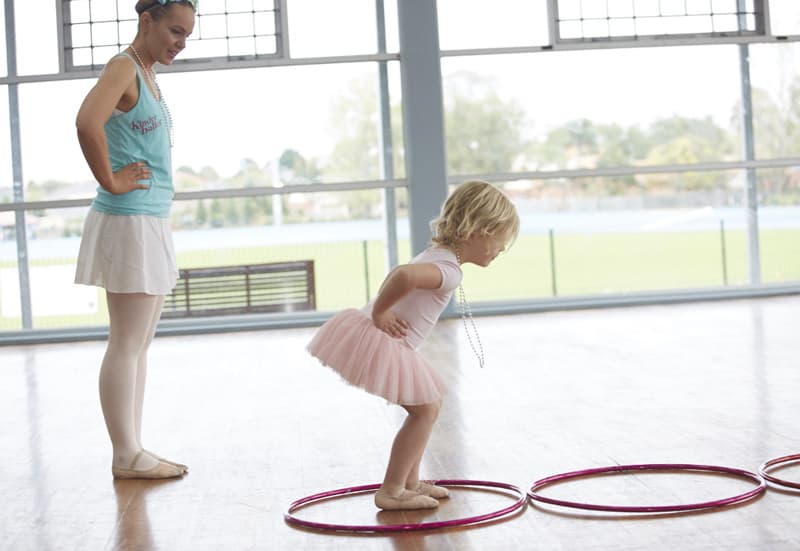

When you first come along to Kinderballet, you may feel that your little dancer doesn’t measure up compared to others in the room and it’s important to remember that every child develops at their own pace.
In early childhood dance, differences in confidence, coordination, attention, and participation are completely normal, and what you see in one class is just a snapshot of each child’s individual journey. Some children jump straight in, while others take time to observe and feel comfortable. Both are healthy ways of learning. Progress in our Kinderballet classes is not about keeping up with others, but about your child gradually building confidence, coordination, and enjoyment in their own time.
In early childhood, it can feel like everything is measured—first words,first steps, toilet training, social skills, attention span, and even how well they cope with change. Many parents find themselves asking the same question: “Is my child developing normally?”
It’s a completely natural worry, especially when seeing how other children of the same age are responding in class!
Every child is unique, and early childhood development is influenced by many factors, including temperament, environment, health, sleep, and emotional security. The reassuring truth is that developmental milestones are only a guideline, not a deadline. They are designed to help adults understand general patterns of growth, but they do not predict exactly when each child will reach a particular skill.
Milestones Show What’s Common, Not What’s Required
It’s helpful to view milestones as a map, not a stopwatch. They offer a general direction, but they don’t define a child’s potential or determine what success looks like.
Based on general developmental milestones, the Kinderballet program is designed around what is typically expected for the overall capability of each age group, while allowing room for each mini dancer to learn, grow, and meet those expectations in their own individual time.
Progress Looks Different in Every Child
Children grow in the areas they are most ready for. Some develop language quickly, while others shine in physical skills and seem to excel in what is asked of them physically like in a Kinderballet class. Some children are naturally social and confident, while others are cautious and need time to warm up. Our teachers are trained to support the range of behaviours presented to them, to support each child’s individual stage of development and meet them where they’re at in order to progress in their own time.
The Value of a Supportive Environment
We strive to provide a safe, nurturing and inclusive environment for our Kinderballerina’s to learn the skill of dance. Children thrive when they feel safe, supported, and accepted. Encouragement, routine, play, and positive relationships are some of the most powerful tools for healthy development.
Rather than pushing children to meet rigid expectations, we believe that it is beneficial to build confidence and curiosity in children which is why Kinderballet programs are written to engage young children through creative story-telling and inspiring songs and music.
Developmental milestones are helpful tools, but they are not rules.Children develop at different rates, and variation is not only normal it should be expected. The goal of Kinderballet is not to “get there first,” but to build a strong foundation for lifelong learning through the joy of movement and music.



Let their Kinderballet story begin
Find a nearby class and choose the way you would like to try. No uniforms, no pressure - just a gentle first step.